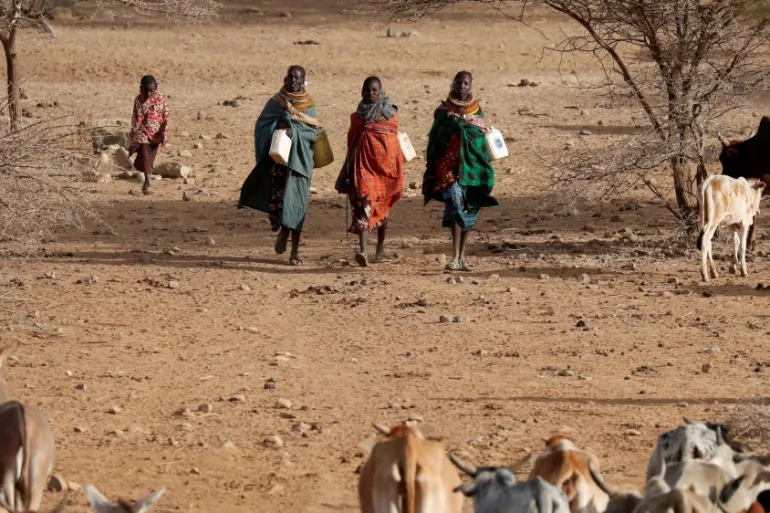
Kenya is facing a worsening food crisis as extreme weather swings from drought to floods continue to disrupt livelihoods and deepen hunger, the Right to Food Coalition has warned, calling the situation a human rights failure driven by weak policies and low investment.
In a statement issued on March 19, 2026, the coalition said the country’s food security is deteriorating as back-to-back climate shocks pile pressure on already vulnerable communities.
It described the shift from prolonged dry conditions to destructive flooding as a dangerous pattern that is leaving millions exposed.
“This is a critical moment for Kenya, and the ‘climate whiplash’ moving from a devastating drought directly into destructive floods is a nightmare for food security in the country,” the group said.
The coalition pointed out that the crisis is unfolding at a time when hunger levels are already high. Referring to the Global Hunger Index 2025, it noted that Kenya is ranked 103 out of 123 countries with a score of 25.9, a level classified as “serious hunger.”
It said more than 3.7 million people were already facing acute food shortages after the failure of the 2025 short rains, leaving many households without enough to eat.
Areas that had been hit hardest by drought are now dealing with floods, further worsening the situation.
The coalition listed Mandera, Wajir, Garissa, Kwale and Kilifi as some of the affected counties, saying rising water levels have damaged farms, destroyed irrigation systems and swept away livestock.
According to the statement, “burst into riverbanks, submerged irrigation schemes… and swept away livestock,” have left communities with little means to recover.
The coalition argued that the unfolding hunger crisis is not only caused by weather but also by long-standing gaps in policy and planning.
“The current famine is not merely a ‘natural disaster’; it is a policy failure. Regrettably, it is a violation of human rights,” the statement read.
It criticized the government for handling food insecurity as a short-term emergency instead of addressing it as a constitutional right under Article 43.
The group said this approach has led to years of underfunding in agriculture and weak support for farmers.
Data cited by the coalition shows that the Agriculture, Rural and Urban Development sector received Sh78.08 billion in the 2025/2026 budget, which is only 3.2 percent of the total national spending, far below the recommended 10 percent.
Beyond funding gaps, the coalition highlighted inefficiencies in the food system, noting that between 30 and 40 percent of produce is lost before reaching consumers due to poor storage and weak infrastructure.
At the same time, the country continues to spend about Sh500 billion every year importing food.
It warned that rising food prices and the high cost of living are making the crisis worse, especially in urban areas. “with the cost of living now outpacing families’ ability to afford even a single meal a day, the result is a systemic economic exclusion of the urban population,” the statement said.
The coalition called for urgent reforms, including the introduction of a Right to Food law, better disaster preparedness, and increased investment in climate-resilient farming systems.
“The time for ‘observations’ and ‘reports’ has passed. Hunger is a political choice to violate human rights,” it said, urging a shift towards a food system that puts citizens first.
The Right to Food Coalition brings together civil society groups, non-governmental organizations, international partners, grassroots movements, farmers, researchers, academia and media, alongside communities most affected by hunger, all working to advance the right to food in Kenya.